Hey there, it’s Jake from your go-to silicon steel supplier – been helping power grid teams keep their grids running strong for over a decade, and let me tell you, one question I get asked nonstop right now is: “What exactly do we need from silicon steel for grid construction?” Silicon Steel
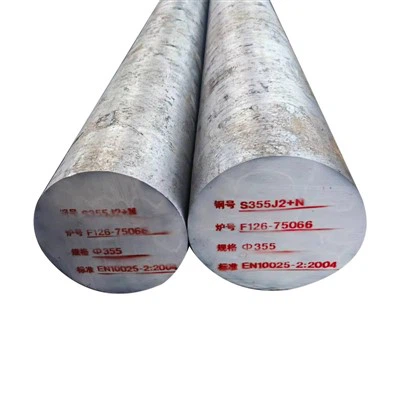
I’ve seen it all – from small rural substations to massive national transmission lines – and when it comes to grid silicon steel, it’s not just any old steel. You can’t grab a random coil from a warehouse and expect it to hold up when the grid’s carrying thousands of megawatts 24/7. Let’s break this down like we’re chatting over a coffee, no stuffy jargon overload.
First off, let’s talk about core loss – that’s the big one, honestly. When electricity flows through transformers and reactors (the backbone of any grid), it creates magnetic fields. Those fields make the silicon steel vibrate and generate heat, and that’s lost energy – energy that’s costing grid operators millions every year. Back in the day, standard steel had crazy high core losses, like 2 or 3 watts per kilogram at 1.5 tesla. Now, modern grid projects need that number way lower – we’re talking less than 1.2 W/kg, and sometimes even 0.8 W/kg for high-capacity transformers. Why? Because every watt saved here adds up to lower operational costs, less greenhouse gas emissions, and a smaller carbon footprint for the whole grid. I remember a project last year in Texas where we supplied low-core-loss grain-oriented silicon steel for their new 500kV substation – they told us they cut their annual energy losses by over 12%, which is basically like planting 10,000 trees worth of carbon sequestration. That’s the kind of impact we’re talking about.
Next up, magnetic permeability. Think of this as how well the steel lets magnetic fields pass through it without fighting back. Grid equipment needs super high permeability because when you’re ramping up or down power (like when a big factory turns on or a solar farm’s output fluctuates), the magnetic field has to shift fast. If the steel’s permeability is low, you need more power to create that field, which again adds to losses and makes the transformer bigger and heavier. For grid use, we aim for permeability values over 10,000 at typical operating magnetic fields. I always tell customers: if permeability’s too low, your transformer’s going to be the size of a shipping container instead of a compact unit that fits in the substation’s footprint – not ideal, especially in urban areas where space is at a premium.
Wait, let’s not forget about saturation flux density. That’s the point where the steel can’t hold any more magnetic field – it’s “saturated.” When that happens, the transformer stops working efficiently, and you get harmonic distortion in the grid. Harmonics are those weird extra frequency signals that can mess up sensitive equipment like medical devices, data centers, and even home appliances. For power grid silicon steel, we need a saturation flux density of at least 1.8 tesla, and grain-oriented steel is the way to go here because it’s engineered to have a strong magnetic alignment in one direction. I had a customer in California a while back who tried using non-oriented steel for a distribution transformer – they hit saturation at 1.6 T, and their grid started throwing error codes every time the AC load peaked. Switched over to our grain-oriented stuff, and those errors vanished overnight. Lesson learned.
Now, let’s get into the physical side of things. Thickness matters a lot here. Thinner steel cores mean less eddy current losses – another type of energy loss from currents that form in the steel itself. For large power transformers (the ones that move high-voltage power across long distances), we use grain-oriented silicon steel that’s 0.23 mm thick. For smaller distribution transformers or reactors, sometimes 0.27 mm works, but 0.23 is the sweet spot for high-capacity grid gear. Too thin, and the steel is fragile – hard to handle during construction, easy to damage when stacking cores. Too thick, and those eddy currents kill efficiency. I’ve had supply headaches with thinner grades in the past – a few years back, a big grid project needed super thin steel, and we had to adjust our rolling process to make it without introducing defects. But it’s doable, and worth it for the savings.
Surface coating is another thing people sleep on. The coating on silicon steel does two main jobs: it insulates the individual steel sheets from each other (so eddy currents don’t jump between layers) and protects the steel from rust. For grid construction, we need a coating that’s heat-resistant, up to around 200°C, because transformers get hot during operation. It also has to be flexible enough so that when we punch or cut the steel into the shapes needed for cores (called laminations), it doesn’t crack or peel. Some cheap coatings break down in the harsh outdoor conditions substations face – rain, humidity, temperature swings. That leads to rusted laminations, which mess up magnetic performance and shorten the equipment’s lifespan. Our customers love our ceramic-based coating – it’s tough, insulates great, and we’ve had transformers with our coating last over 30 years with zero rust issues. That’s a big deal for grid operators, who don’t want to replace equipment every decade.
Wait, what about mechanical strength? Grid construction sites are rough – you’re moving big coils of steel, stacking heavy laminations, installing them in tight spaces. The steel needs to have enough tensile strength to not tear during cutting or punching, and enough yield strength to hold its shape when under pressure. If a lamination warps during installation, it creates gaps in the core, which increase core loss. For grain-oriented silicon steel, we target a tensile strength of at least 400 MPa. I once had a job where a local supplier sent over steel that was only 320 MPa – when the crew started punching the laminations, half of them cracked. We sent our replacement, and the project went off without a hitch. That extra strength might seem small, but it saves time and money on-site.
Also, let’s talk about environmental and regulatory stuff. Grids are shifting to net-zero, so silicon steel has to meet modern environmental standards. No heavy metals in the coating, low volatile organic compounds (VOCs) during manufacturing. More and more grid operators are asking for steel that’s traceable – knowing where it’s mined, how it’s made, what its carbon footprint is. We’ve invested in solar-powered manufacturing for our main silicon steel lines, and we can provide full lifecycle carbon data for every coil we supply. That’s become a big selling point lately, especially in Europe and the US where there’s new infrastructure funding tied to clean energy goals. A lot of projects now require “low-carbon materials” to qualify for grants, so that’s a requirement that didn’t exist 10 years ago.
Don’t get me started on compatibility with other grid components. Silicon steel cores aren’t used in a vacuum – they go into transformers with copper windings, insulating oil, and cooling systems. The steel has to be compatible with the insulating oil, right? If it reacts with the oil, it breaks down the oil’s quality, leading to more maintenance. Our steel’s coating is formulated to be inert with standard mineral and ester-based insulating oils, so that’s a non-issue. Also, the magnetic alignment of the grain-oriented steel has to match the design of the transformer core – if the grains aren’t aligned correctly, you lose all those core loss savings. We use advanced laser inspection to check grain orientation on every coil we ship, so customers don’t have to worry about that.
Let me give you a real example to tie this all together. Last year, we worked on a huge transmission line project in the Midwest US – they needed 12 new 750kV transformers. The specs they sent over were: core loss ≤0.9 W/kg at 1.5T, permeability ≥12,000, saturation ≥1.85T, 0.23 mm thickness, ceramic coating, tensile strength ≥420 MPa, and full carbon footprint data. We modified our standard grain-oriented steel slightly to hit exactly those numbers – adjusted the silicon content (we use 3.2-3.5% silicon for grid steel, by the way, that’s the sweet spot between magnetic performance and workability) and tweaked the rolling process to improve permeability. The project finished on time, and the transformers have been running at 98.7% efficiency, which is way above the industry average of around 97%. The operators told us they’re saving over $2 million a year in energy costs from using our steel. That’s the kind of result you get when you hit all the requirements.
Now, I know a lot of grid engineers and procurement teams might be thinking, “This sounds great, but is it all necessary?” Let’s be real – cutting corners on silicon steel leads to bigger problems down the line. A transformer with high core losses uses more energy, drives up rates for customers, and costs more to maintain. A transformer that rusts fails early, leading to costly outages – and outages cost the US economy around $150 billion a year, according to recent data. So investing in the right silicon steel upfront saves everyone money in the long run.
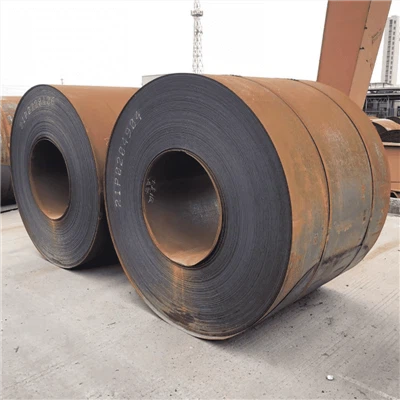
If you’re working on a new grid construction project – whether it’s a substation, transmission line, transformer, or reactor – and you’re not sure what silicon steel you need, hit me up. We don’t do one-size-fits-all here. We’ll work with you to match the steel to your specific project specs, budget, and long-term goals. No sales pitches, just honest advice from someone who’s been in this game long enough to know what works when the grid depends on it.
Duplex Steel Plate or Sheet References:
- International Energy Agency. (2022). Grid Modernization: Key Materials and Technologies for a Low-Carbon Grid.
- NEMA Standards Publication TR 1-2020. (2020). Magnetic Materials for Power Transformers.
- US Department of Energy. (2021). Cost-Benefit Analysis of High-Efficiency Grid Equipment.
- Society of Automotive Engineers. (2019). Metallurgical Requirements for Electrical Steels in Power Applications.
Jiangsu Cunrui Metal Products Co., Ltd.
As one of the most experienced silicon steel manufacturers in China, we also support customized service. Please rest assured to buy cheap silicon steel for sale here from our factory. If you have any enquiry about pricelist and free sample, please feel free to email us.
Address: 32-117,119, Nanfang Stalnless Steel Trading Conter, Wuxi,Jiangsu, China
E-mail: karen@cunruimetal.com
WebSite: https://www.cunruimetals.com/
